
7/7/2026
How to Make a Moroccan Tagine — Traditional Recipe for Beginners
Learn how to cook a traditional Moroccan chicken tagine with preserved lemon and olives. Step-by-step beginner recipe with spice guide, tips, and common mistakes to avoid.
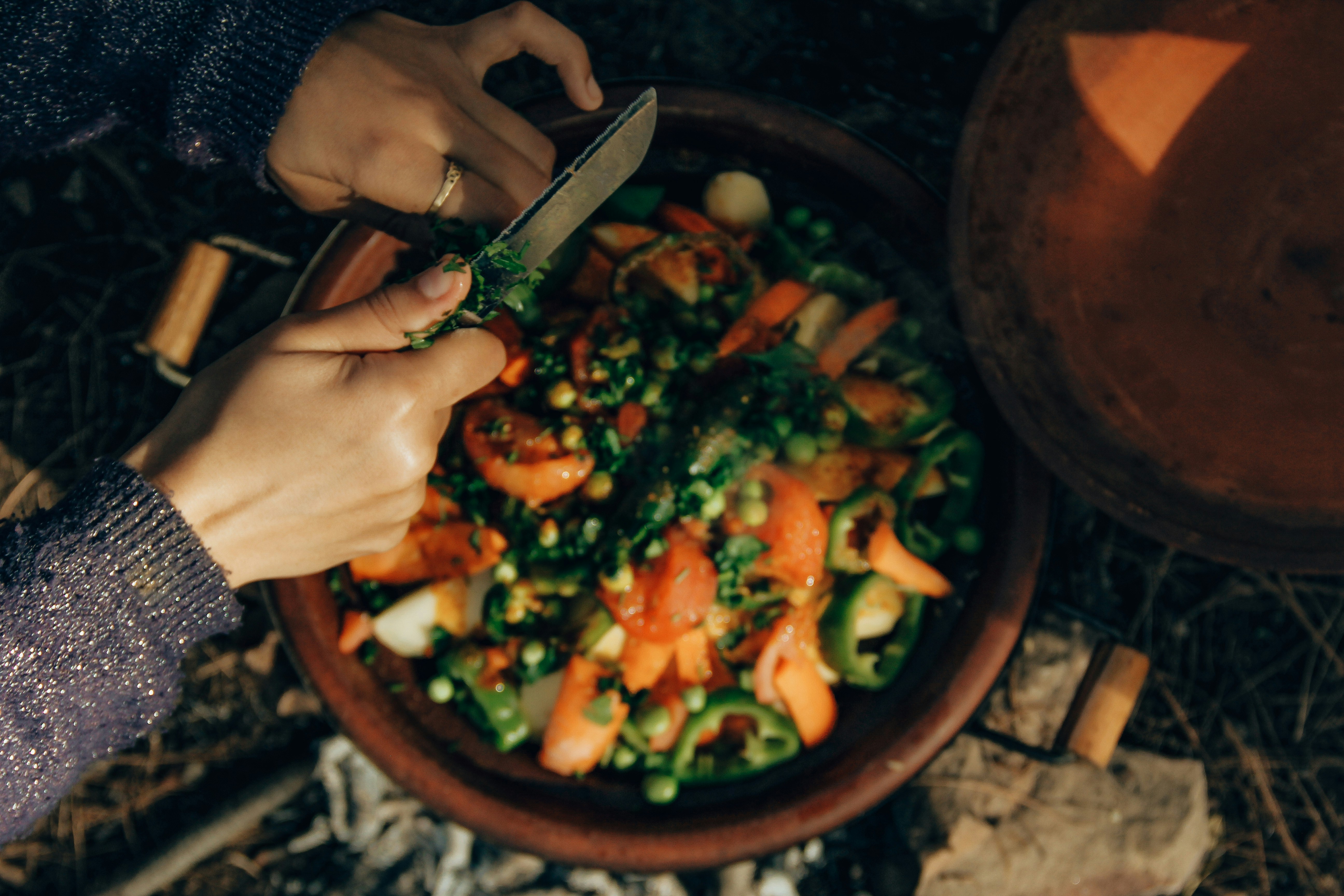
The tagine is not just a dish. It is a philosophy. Low heat, slow time, and the belief that patience transforms ordinary ingredients into something extraordinary. Once you understand that, everything else follows naturally.
Every visitor who comes to Morocco eventually asks the same question — "how do I make this at home?" The tagine is Morocco's most iconic dish, and the good news is that it's far more forgiving than it looks. You don't need years of practice. You need the right spices, the right technique, and a little patience. This guide teaches you exactly how to make a classic chicken tagine with preserved lemon and olives — the most beloved version — step by step, from scratch.
The Secret
"A tagine is never rushed. The lid stays on. The heat stays low. That is the entire secret — and it takes real discipline to follow."
What Exactly Is a Tagine?
The word "tagine" (also spelled "tajine") refers to two things — the conical clay pot it's cooked in, and the slow-cooked stew that comes out of it. The pot's distinctive pointed lid creates a cycle of condensation that continuously bastes the ingredients from above, keeping everything impossibly moist without adding water. It is one of the most elegant cooking designs in culinary history.
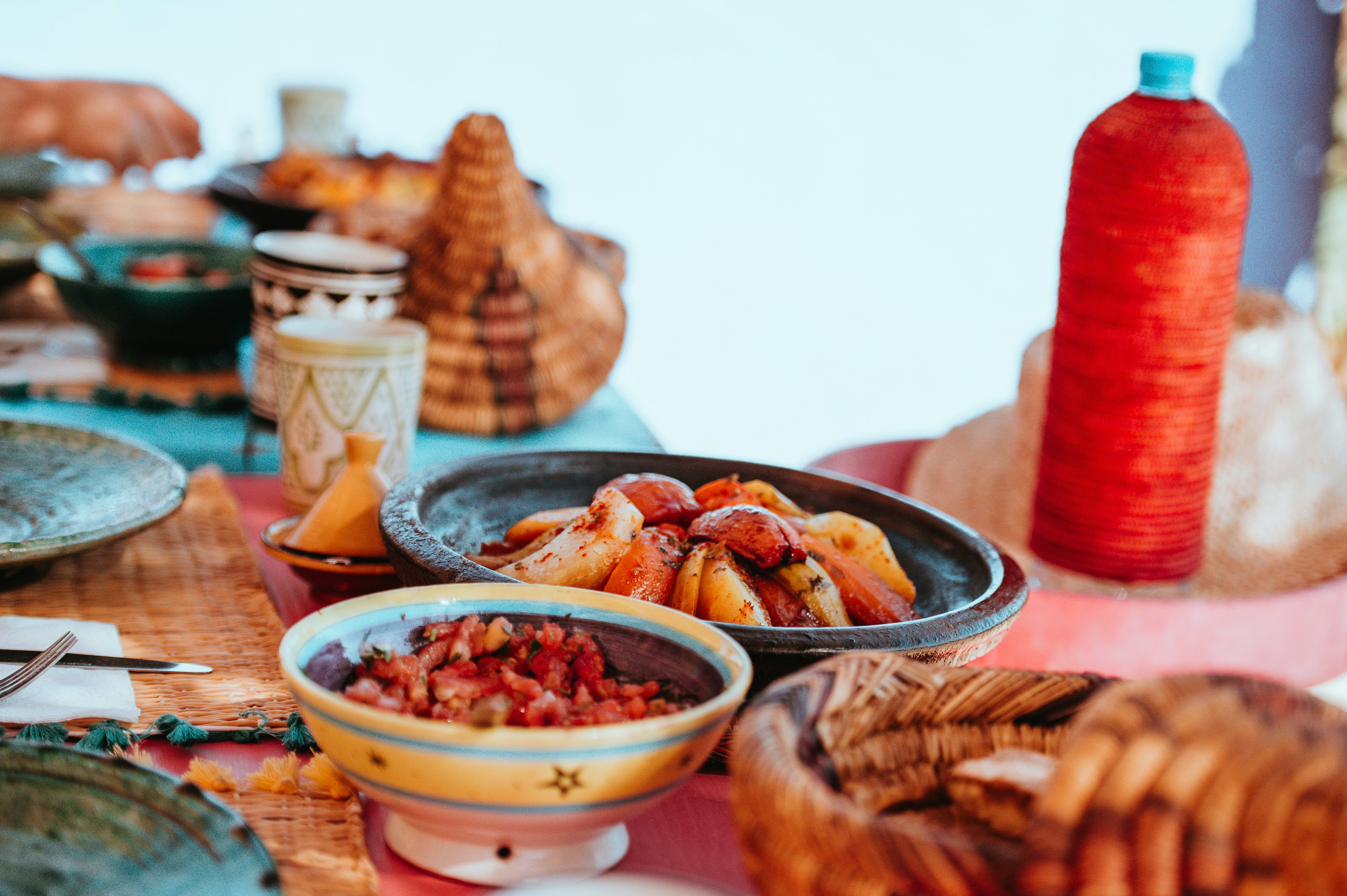
Tagines vary enormously across Morocco — chicken with preserved lemon and olives in the north, lamb with prunes and almonds in Fes, fish tagine on the coast, vegetable tagine in the mountains. Every family has their version. Every region has its signature. But the technique is always the same: layer, spice, cover, wait.
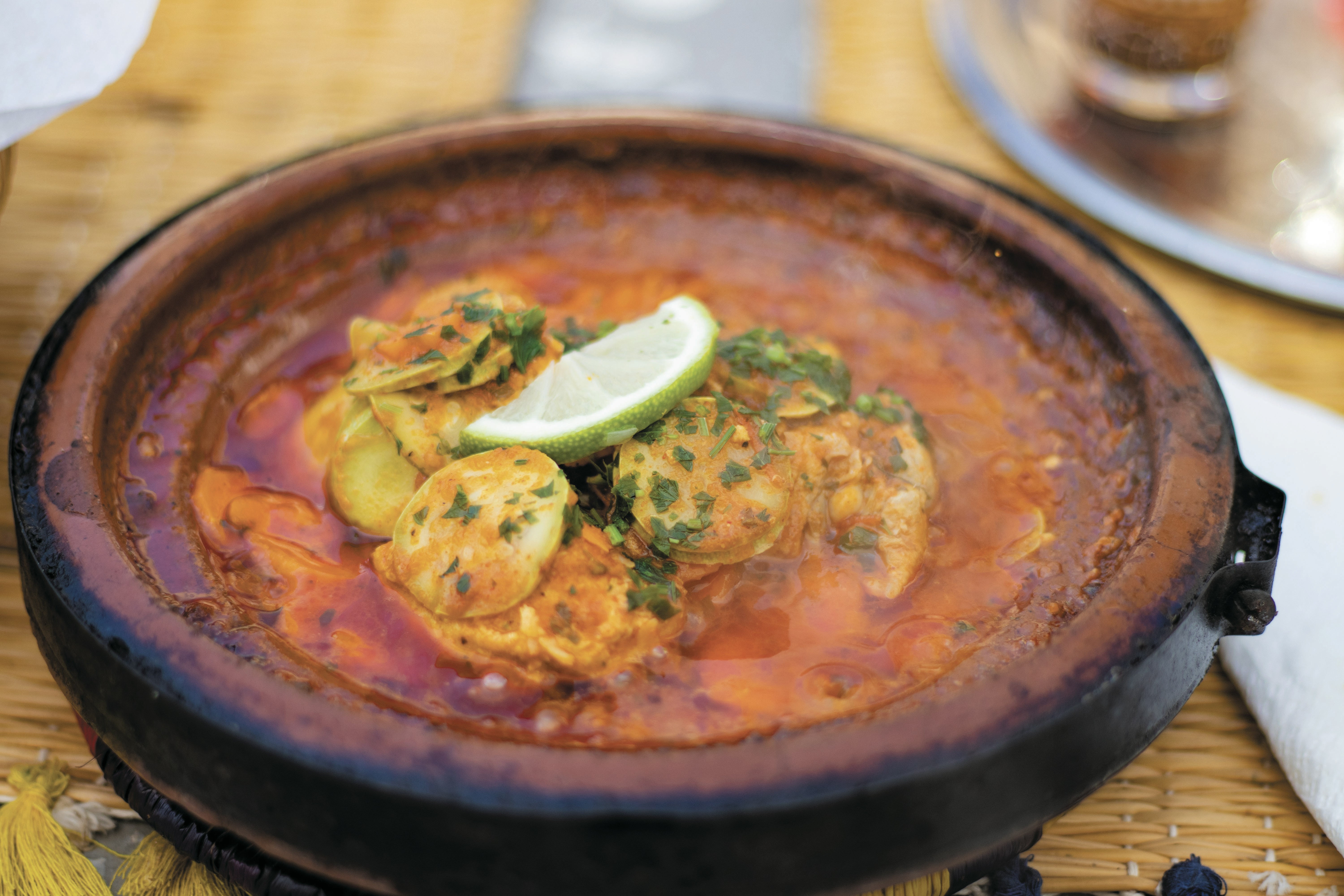
Do You Need a Tagine Pot?
Ideally yes — but no. A traditional unglazed clay tagine gives the most authentic result and can be bought for $15–30 at any Moroccan souk, or online before your trip. If you don't have one, a heavy-bottomed Dutch oven or casserole dish with a tight lid works very well. The result will be 90% as good.
New Clay Pot? Season It First
Soak a new clay tagine in water for 24 hours before first use. Then rub the inside with olive oil and heat it slowly in a low oven for an hour. This prevents cracking and removes the raw clay taste. Skip this and your first tagine will taste like a flowerpot.
The Spices — This Is Where Morocco Lives
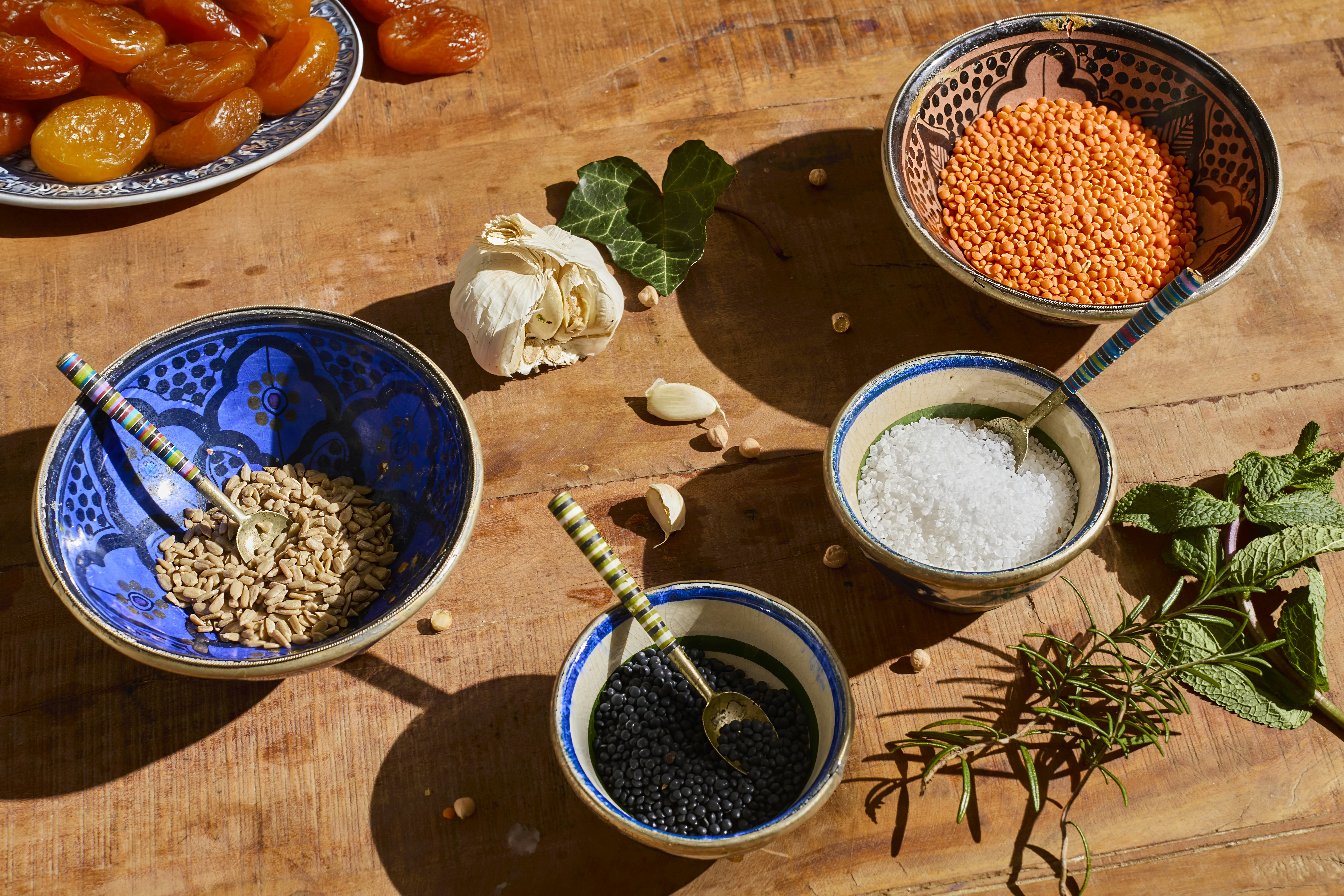
Moroccan cooking uses spices not to make food spicy — but to build warmth, depth, and fragrance. None of the spices below are hot. All of them are essential. Find them at any Middle Eastern grocery store, online, or bring them back from Morocco's spice souks where they cost almost nothing.
Ingredients — Chicken Tagine with Preserved Lemon & Olives
Serves 4 people · Prep: 20 min · Cook: 1 hr 30 min
Step-by-Step Instructions
Marinate the Chicken
In a large bowl, combine the chicken pieces with grated onion, garlic, olive oil, ras el hanout, cumin, ginger, turmeric, cinnamon, salt, pepper, and half the cilantro and parsley. Mix well so every piece is coated. Cover and leave to marinate for at least 1 hour — ideally overnight in the fridge. This step is what separates a good tagine from a great one.
Build the Base
Heat your tagine or Dutch oven over medium-low heat. Add a drizzle of olive oil. Spread any remaining grated onion across the bottom of the pot in an even layer. This creates a bed that prevents the chicken from burning and adds sweetness as it slowly caramelizes. Do not rush this — let the onions soften for 5 minutes before adding anything else.
Layer the Chicken
Place the marinated chicken pieces on top of the onion base, skin side up. Pour the saffron water over everything. Add the ½ cup of water or stock around the sides — not over the chicken. Scatter the remaining herbs on top. The liquid should come no more than halfway up the chicken — a tagine steams, it doesn't boil.
Cover and Cook Low & Slow
Put the lid on. Reduce heat to low. Do not lift the lid for at least 45 minutes. This is the hardest part. The steam circulates inside, cooks the chicken from every direction, and builds a sauce from the chicken juices and spices. After 45 minutes, check — the chicken should be nearly cooked through. If the sauce looks dry, add a small splash of water. If it looks too liquid, leave the lid slightly ajar for the last 15 minutes.
Add Preserved Lemon & Olives
In the last 20 minutes of cooking, add the preserved lemon skin (cut into strips, pulp discarded) and the olives. These go in late because they're already salty and intensely flavored — too long in the tagine and they overpower everything. Taste the sauce and adjust salt at this point — the preserved lemon adds significant saltiness so you may need very little extra.
Serve — The Moroccan Way
Bring the tagine directly to the table, lid on. Lift the lid at the table — the steam and aroma that escape is part of the experience. Serve with fresh Moroccan khobz bread to scoop with, never a fork. Garnish with fresh cilantro and a few lemon slices. In Morocco, everyone eats from the communal pot using only the bread and their right hand. That is the full experience.
Common Beginner Mistakes — And How to Avoid Them
❌ Lifting the lid constantly
Every time you lift the lid you release the steam that's doing the cooking. Set a timer and leave it alone. Trust the process.
❌ Too much water
A tagine is not a soup. Too much liquid dilutes the sauce and ruins the texture. The chicken releases its own juices — you need very little added liquid.
❌ High heat
High heat burns the bottom and dries out the top. Low and slow is not a suggestion — it is the technique. If you smell burning, your heat is too high.
❌ Skipping the marinade
The overnight marinade is where the flavor goes deep into the meat. Even 1 hour makes a significant difference vs no marinade at all. Plan ahead.
Other Tagine Variations to Try Next
The Real Secret — Learn It in Morocco
You can follow this recipe perfectly and make a genuinely excellent tagine. But there is a version of this dish you can only taste in Morocco — made by a grandmother in a mountain village who learned from her grandmother, using spices she bought that morning at the souk, cooked over charcoal in a clay pot that's been seasoned for thirty years. That version will ruin you for all other food.
Several of our tours include a traditional home cooking experience — you cook alongside a local family, learn the techniques firsthand, and eat the result together. It is one of the most requested experiences we offer.